

The monsoon is the real test of a villa in Alibaug. Months of heavy rain, high humidity and salt-laden sea air will find any weakness in a building, usually in the first year. Most monsoon problems are decided during design and construction, not after. Here is what to get right.
Plan the build around the rains
Excavation, foundations and structural work are far easier, safer and better in dry weather. A good schedule finishes the structure and the roof before the monsoon, then uses the rainy months for internal work. Exterior plaster, paint and outdoor finishes should not be done in wet weather.
Get water away from the building
- Site levels and drainage. The plot should slope away from the villa, with surface drains sized for monsoon downpours, not average rain.
- Plinth height. A raised plinth keeps the floor above water that collects on the site in heavy rain.
- Rainwater pipes and gutters. Enough of them, large enough, and easy to clean before each monsoon.
Waterproof the places that always leak
Terraces, roofs, bathrooms, balconies, planters, water tanks and any part of the building below ground need proper waterproofing systems, with correct slopes and careful detailing at joints, corners and pipe openings. These are the details that HSIOS™ quality checklists require to be inspected and photographed before they are covered.
Design roofs and openings for driving rain
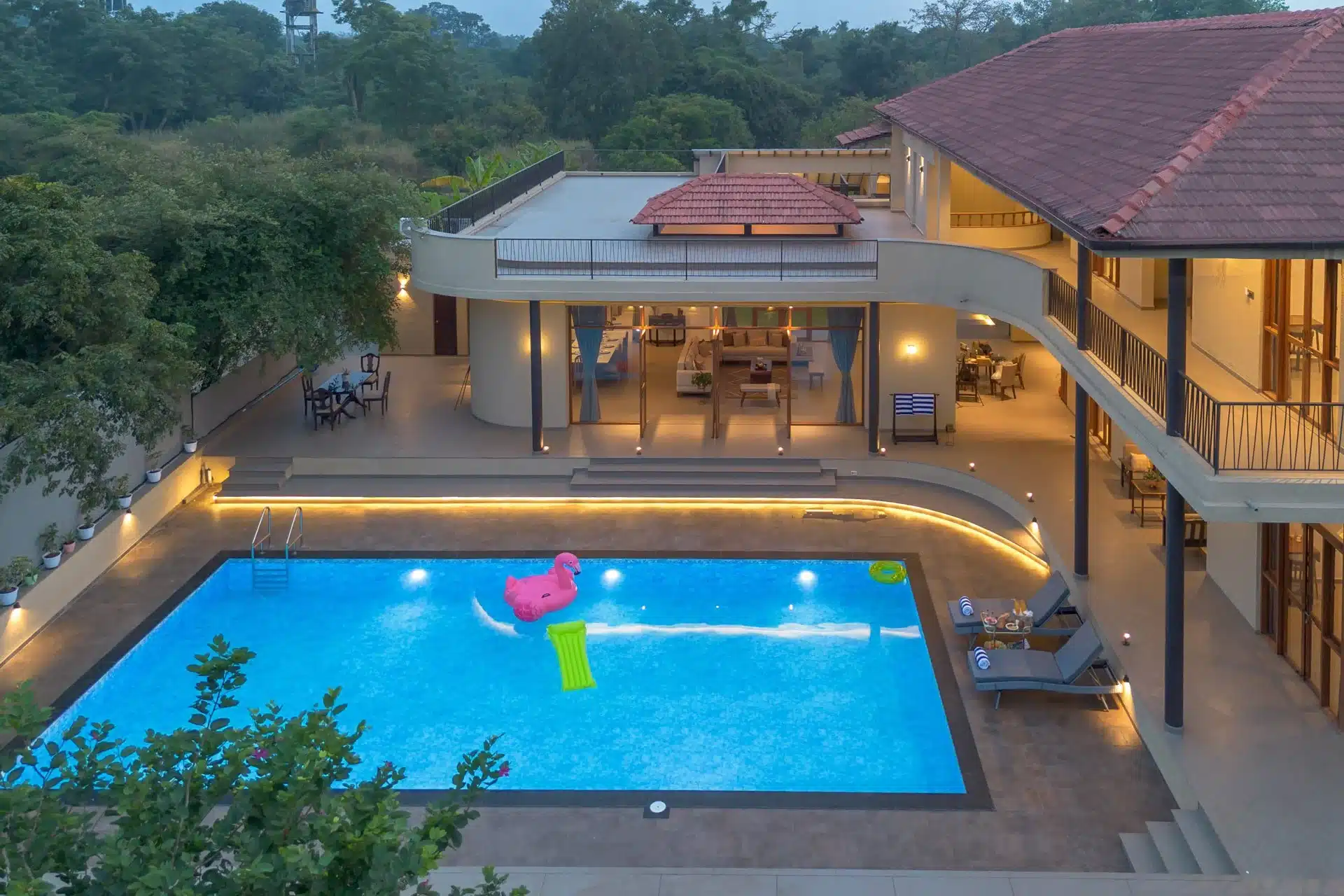
Sloping roofs with generous overhangs, sunshades over windows and covered verandas protect walls and openings from rain driven sideways by monsoon winds. Our guide to coastal roofing materials covers the options.
Choose materials that survive salt and humidity
- Adequate concrete cover over reinforcement and proper curing, so that steel does not corrode.
- Corrosion-resistant hardware, railings and fixtures near the sea.
- Timber and joinery that are treated and sealed, plus anti-termite treatment.
- Cross-ventilation and dehumidification so that cupboards and closed rooms do not grow mould while the villa is empty.
Keep the villa monsoon-ready every year
A pre-monsoon check every May (drains, gutters, roof, terrace joints, pumps and generator) prevents most emergencies. On HSIOS™, the Digital Twin of each Hestia villa records every pump, waterproofing warranty and AMC date, and sends reminders before they are due. For more on coastal building, read best construction practices for coastal villas.
Frequently asked questions
When is the best time to start building a villa in Alibaug?
Start so that excavation, foundations and the structure are done in the dry months and the roof is closed before the monsoon. The rainy months can then be used for internal work.
What are the most common monsoon problems in coastal villas?
Leaking terraces and bathrooms, damp walls, waterlogging around the plinth, rusted fixtures and mould in closed rooms. Most come from details decided during construction.
How do I maintain a villa I do not live in during the monsoon?
Do a pre-monsoon check every year, keep drains and gutters clear, and keep a record of pumps, warranties and AMCs. On HSIOS™ the villa’s Digital Twin holds this record and sends reminders.
Plan your villa with Hestia
Hestia Villas builds complete luxury villas in Alibaug, from structure to finished interiors. Every villa is managed on HSIOS™ (Hestia Smart Infrastructure OS) from design through construction to handover, and after handover it continues as your villa’s Digital Twin. Book a site consultation, call +91 80102 34802, or see how we build with HSIOS™.